
 ResearchGate
 Bilibili
Presidential office
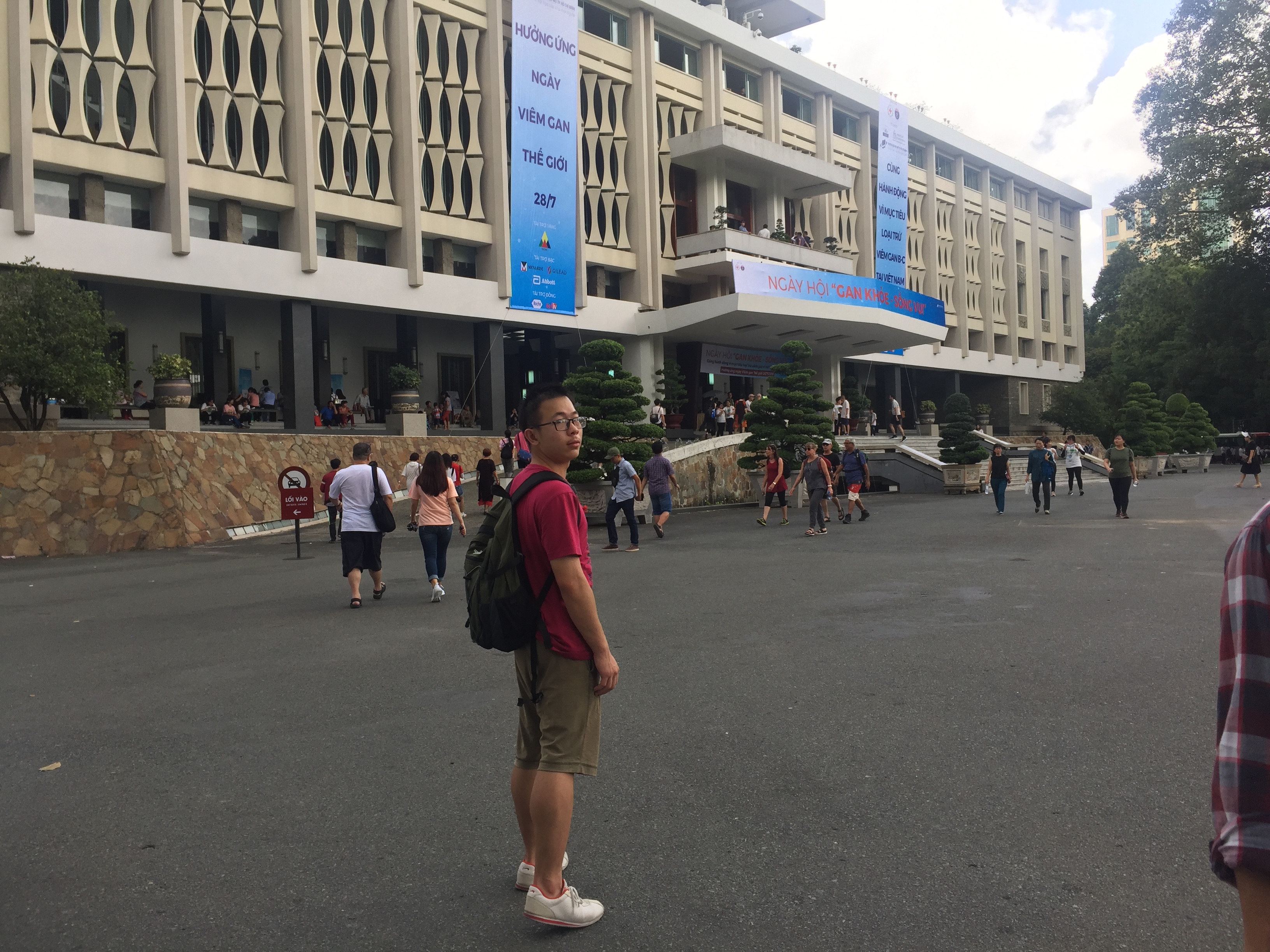
Beneath the sweltering sun of a Vietnamese summer, my footsteps echoed through the corridors of time as I ventured into the heart of Ho Chi Minh City, where the Presidential Palace stood as a testament to a nation’s narrative.
The façade of the palace, awash with the purest of whites and adorned with the distinctive blue that graced its window frames, captivated my gaze. The fountains danced and flags billowed in a tranquil display of solemnity and grace, compelling a slower pace, an immersion into the celebratory silence. This very site, once the Presidential Palace of South Vietnam, bore witness to the pivotal moments of the Vietnam War, encapsulating the iconic scene of tanks breaching its gates in 1975, heralding the war’s end and the nation’s rebirth.
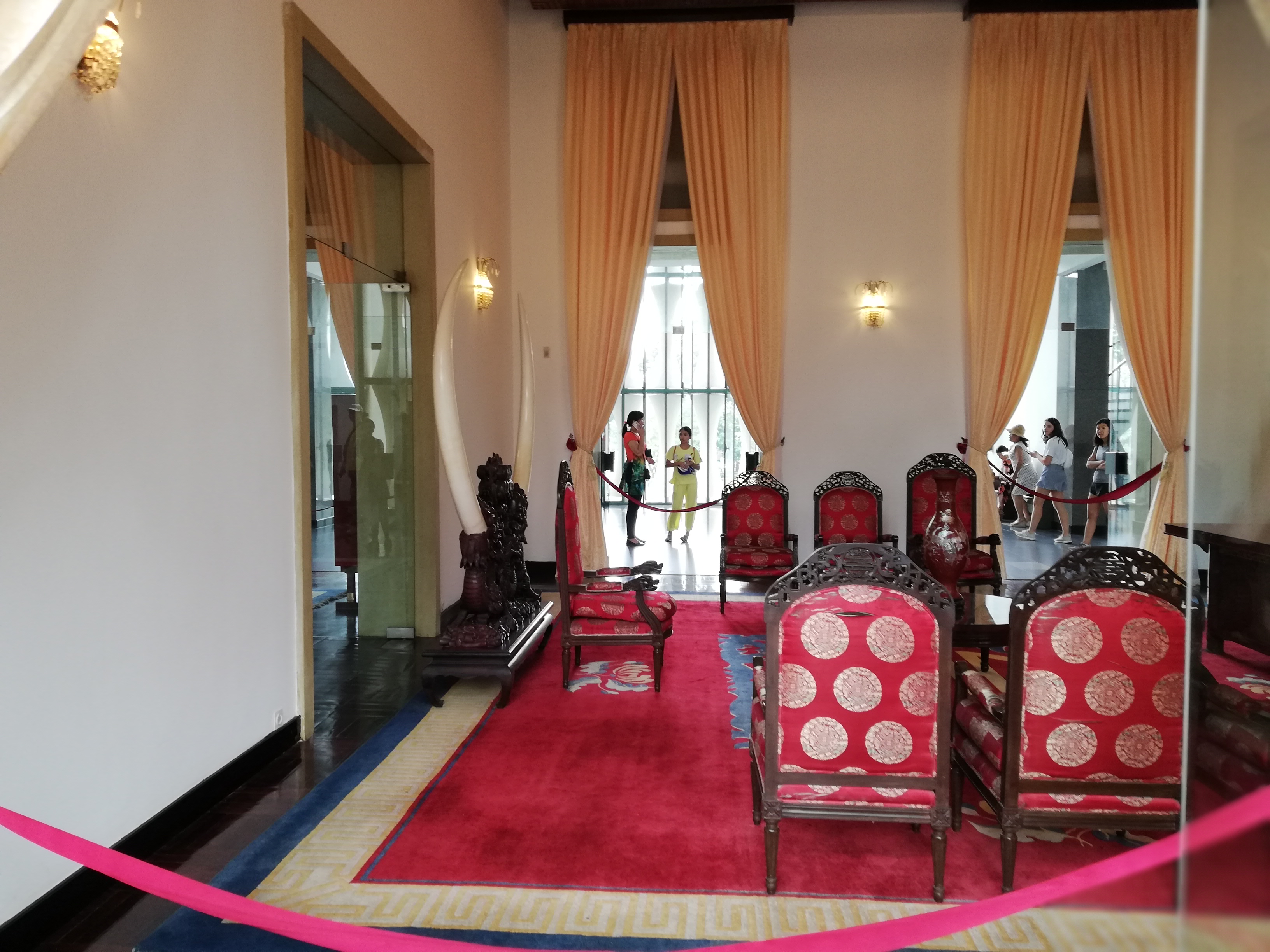
Crossing the threshold into the inner sanctum, I was transported into a realm where opulence met history. The grand reception rooms, with their ornate furniture and lavish décor, whispered tales of official ceremonies and significant state events of yore. Every artifact narrated a saga, each tile underfoot bore the imprints of bygone eras.

The centerpiece, a majestic carpet, emblazoned with the dragon motif, commanded attention. In Vietnamese culture, the dragon symbolizes strength, wisdom, and good fortune, and here it seemed to guard the edifice itself. Standing at the carpet’s edge, I felt the solemnity and the weight of history beneath my feet.
This journey through the Presidential Palace afforded me a profound connection to the annals of Vietnam. More than a political symbol, the palace served as a repository of national memory. There, amidst the grandeur of the past and the tranquility of the present, I found a renewed anticipation for the future. As the sun dipped below the horizon, I departed from the palace grounds, but the day’s experiences were indelibly etched into my memory. These photographs, this slice of history, and each step I took through the palace’s halls, have become an integral part of my life’s journey.